Name the Feeling
How does Pip the frog feel? Look, listen, and help Pip feel calm.
For grown-ups
Your child names how Pip the frog feels. Faces: Pip makes a face and your child picks the matching feeling (happy, sad, mad, scared). Moments: the voice tells something that happened to Pip and your child picks how Pip might feel; more than one feeling can fit. What can Pip do?: after the feeling, your child picks a kind, helpful next step.
A pick that doesn't fit just settles back, and the voice asks a gentle question. There is no losing, no timer and nothing to collect. "Breathe with Pip" is always there: your child holds the bubble to breathe in and lets go to breathe out. A round is 6 feelings, then it stops.
Child lock: tap the lock at the top right. The ways out hide and the back button stays in the game. To unlock, hold the lock for 3 seconds and answer a sum.
Why it's good for your child, what they learn, and how we designed it
Free, no ads, no sign-in. We count plays without names or anything that identifies your child, and your child is never recorded. Pip is drawn for this game; other pictures are Microsoft Fluent Emoji (MIT license).
Why it's good for your child
Children who could read and name feelings at age 5 showed better social behavior and schoolwork at age 9 (Izard 2001, Psychological Science). Preschoolers' emotion knowledge also predicts early school success and better emotion regulation (Denham 2015). Name the Feeling practices it in short, calm turns, and the line on the "All done" screen brings it back to your child's own day, where it matters most.
What they learn
Naming 12 feelings from faces and from everyday moments: happy, sad, mad and scared first, then surprised, tired, excited and worried, then proud, frustrated, lonely and calm. That one moment can bring more than one feeling, and simple ways to calm down or get help, like taking a breath or asking a grown-up. These map to CASEL self-awareness and self-management, and to emotional functioning in the Head Start Early Learning Outcomes Framework.
How we designed it for ages 3 to 6
The game never says a feeling is wrong: each moment accepts every feeling that fits, and the voice adds another one some children might feel. Motion is slow with one thing moving at a time, and there is no music, nothing to collect and no "one more" prompt (Lillard & Peterson 2011, Radesky 2022). The calming breath is held by your child's own finger, so it goes at their pace and never loops, and a round is 6 feelings, then it stops on "All done".
About the game
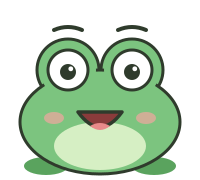
Name the Feeling is a free feelings game for preschoolers and kindergartners, like a set of emotion cards that talk. Pip, a small round frog, sits on a lily pad at dusk. Your child looks at Pip's face, or listens to what happened to Pip, and taps the feeling pebble that fits. The voice reads everything, so children who can't read yet can play.
The three games
- Faces (age 3): happy, sad, mad and scared. After each answer the voice names what on Pip's face shows it ("See Pip's big smile?"). Two pebbles at first, then three.
- Moments (ages 4 to 5): adds surprised, tired, excited and worried, in ten everyday moments like a dropped ice cream or a visit from Grandma. Every feeling that fits is praised, and the voice adds another one some frogs might feel.
- What can Pip do? (ages 5 to 6): adds proud, frustrated, lonely and calm. After the feeling, your child picks a kind next step, like take a breath, ask for help or try again. Unkind choices never appear.
How a round goes
A round is 6 feelings. Then the game stops on "All done" with Pip calm on the lily pad and a question for you to ask, like "When did you feel worried today? What helped?" The next round waits for a tap. More: how we build calm games.
Questions parents ask
Is Name the Feeling free?
Yes. There is no sign-in, nothing to download and nothing to buy. It runs in the web browser on phones, tablets and computers.
What happens when my child picks a feeling that doesn't fit?
The pebble settles back and the voice asks a gentle question, like "Hmm, would Pip feel happy? Look at Pip's eyes and mouth." After a pause or two tries, the screen dims around what fits so it stands out.
What is Breathe with Pip?
A calming breath your child can take any time: hold the bubble to breathe in while it slowly grows, and let go to breathe out. Once for each tap.
All done!
You helped Pip with 6 feelings.
Grown-up: